
Parents: $849 One Time AI Sports Camera for Single Player Highlights

There are two practical AI sports camera approaches on the market: wearable sensor systems that follow one athlete, and vision-based systems that watch the whole field. Parents who want guaranteed footage of their own child usually do best with a wearable-sensor product, while coaches who need full-field tactical data often prefer vision-based platforms. Some vision systems run on cloud subscriptions; many single-player sensor products, including I-TRX, are one-time purchases. Your choice comes down to one question: do you need to capture one athlete reliably, or the entire field?
Comparing tracking approach, accuracy, and everyday features
Every AI sports camera makes a bet on how it finds the action. A wearable-sensor system pairs a small transmitter worn by the athlete with a camera that locks onto that signal, so the lens follows the player rather than the ball or the crowd. A vision-based system instead uses computer vision to detect the ball, players, and field lines, then decides where to point and zoom. The first guarantees one athlete stays in frame. The second gives a wider tactical picture but can lose track of any single player when the action gets crowded.
Both approaches share the same enemies: bad light, occlusion, and reflective surfaces. Vision-based tracking struggles most when players cluster near the ball, when the sun sits low on the horizon, or when a wet field throws glare back at the lens. A hardware review of the Raspberry Pi AI Camera found stable 30 fps tracking with the Sony IMX500 sensor in well-lit demos, but performance in low light or heavy occlusion is a separate challenge that on-device AI still handles unevenly.
A few features decide whether a camera fits your actual games:
Latency and buffering: a short buffer that saves the seconds before a play starts prevents missed goals or big hits.
Mounting: tripods work for fixed sidelines, while pole or fence mounts matter for tight youth fields.
Battery life: a full weekend of games demands either a large battery or an easy swap.
Connectivity: direct-to-phone transfer skips the wait that cloud upload requires.
Export format: standard video files matter if you plan to edit clips in outside software.
Pro Tip: Ask any seller exactly how the camera keeps its subject in frame when three players are shoulder to shoulder near the ball. The answer tells you more about real-world accuracy than any spec sheet.
How to choose the right camera for your role
Your priorities should drive the purchase, not the feature list. A parent’s main job is making sure one child’s plays get captured every time, regardless of where the ball goes. A coach usually wants a wider view that shows formation and movement across the field. A recruit or a family building a highlight reel needs polished, shareable clips more than raw footage.
Before buying, ask:
Does the camera guarantee tracking of one player, or does it follow the ball and hope the right athlete stays in frame?
Are highlights saved automatically, or does someone need to scrub through full game footage afterward?
Does the product charge a monthly fee, or is it a one-time purchase?
What happens in low light, rain, or a crowded penalty box?
How does footage get from the camera to a phone or laptop?
Budget shapes the answer too. Entry-level fixed cameras cost the least but require manual setup and offer no player tracking. Mid-range wearable-sensor systems add automation and single-player accuracy without recurring fees. Higher-end vision platforms with multi-camera stitching and cloud analytics cost more upfront and often carry subscription pricing on top.
Pro Tip: Treat a subscription requirement as a red flag if your main goal is casual weekend highlights. Recurring fees make sense for teams that need season-long analytics, not for a parent who just wants Saturday’s goal.
I-TRX shows how player-worn tracking works in practice
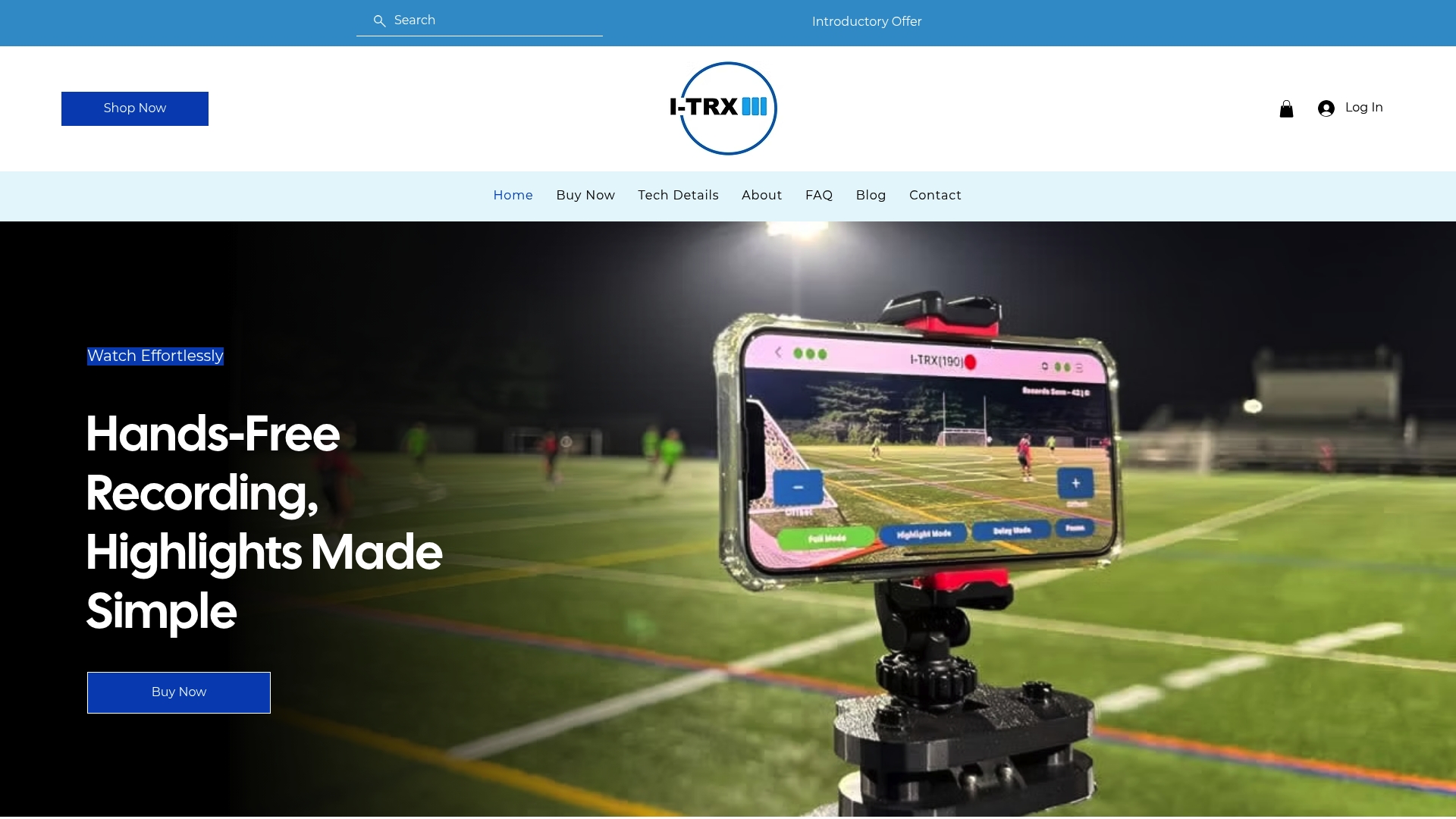
I-TRX is built around the wearable-sensor approach: a small sensor pack worn by the athlete pairs with a camera that follows that one player automatically, whether the game is in full swing or the athlete is training alone. The system records directly and saves highlights instantly, so parents on the sideline can watch the game instead of operating a camera.
Client materials describe a handful of concrete benefits that matter to the two groups who use it most:
Parents get a hands-free way to capture every game without missing a play to fumble with a phone.
Athletes build highlight reels usable for recruitment, since the footage stays focused on their own performance rather than the whole team.
Sharing happens straight to an iPhone, with no manual editing step required before clips go out to family, coaches, or recruiters.
I-TRX’s positioning is direct: single-player tracking based on a wearable sensor, saved instantly with no monthly fees. That combination of guaranteed subject tracking and a one-time purchase is what separates a wearable-sensor product like this from cloud-dependent vision systems built for team-wide analytics.
The company does not claim to replace full-field coaching tools, and its stated focus stays on the single-athlete use case rather than broader tactical analysis.

Matching the camera to your weekend
The right approach depends on who is filming and why:
Parents at weekend games want a camera that locks onto their child and requires no operation once it’s set up. A wearable-sensor system fits this best, since it removes the need to track the ball or anticipate plays.
High-school athletes building recruiting clips need footage that isolates their own performance across a season, then trims down to a short reel. Player-worn tracking produces raw material that still benefits from a quick manual edit before it goes to a coach.
Coaches doing practice analysis need a wider view that shows spacing, formation, and team movement rather than one player. A vision-based multi-camera setup, even a simple phone tripod at a higher angle, serves this better than single-player tracking.
Content creators and quick social clips prioritize instant export and direct phone integration over deep analytics, since speed to post matters more than tactical detail.
What AI sports cameras cost and where the fees hide
Prices vary by how much processing the camera does and whether that processing happens on the device or in the cloud. On-device systems with embedded neural processors, like the Sony IMX500 sensor Tom’s Hardware tested, handle inference locally and draw less power than systems that send footage to the cloud for analysis. That difference affects both battery life and whether a subscription is required.
Wearable-sensor systems built for single-player tracking, such as I-TRX, tend to be one-time hardware purchases: I-TRX’s Automated Player Tracking Camera lists at $849 one time with no recurring fee. Vision-based platforms that stitch multiple camera feeds or run heavy cloud analytics more often carry monthly or seasonal subscription pricing on top of the hardware cost.
Before buying, budget for the extras:
Mounts suited to your field or gym, since a tripod that works for baseball may not work for soccer.
Spare batteries if games run back to back on weekends.
Basic editing software if you plan to trim clips beyond what the camera saves automatically.
Why automation is a draft, not a finished product
AI tracking gets you most of the way there, but it is not the final word on a recruiting reel. Automated systems commonly lose accuracy in low light, heavy occlusion, or with reflective surfaces like wet turf, and practitioners generally treat AI-tagged highlights as a first pass rather than a finished product. A few minutes of manual review before sending a clip to a coach catches the moments automation missed and keeps the reel accurate.
— John
Where I-TRX fits if you want single-player highlights without a subscription
If your priority is guaranteed footage of one athlete without adding a monthly bill, I-TRX’s wearable-sensor system is built for exactly that. It saves highlights instantly to an iPhone, skips manual filming entirely, and comes as a one-time purchase rather than a recurring plan. Readers who want the specifics can check the full feature breakdown or see pricing details directly.
Sources
Independent hardware performance data comes from Tom’s Hardware’s AI camera review. For coach-ready filming setups, see this phone-based filming guide.
Raspberry Pi AI Camera review: AI for the masses | Tom’s Hardware
FAQ
Which AI sports camera requires no subscription?
Wearable-sensor single-player systems are more commonly sold as one-time purchases than vision-based platforms. I-TRX, for example, is a one-time hardware purchase at $849 with no monthly fee, unlike many cloud-based vision systems that charge ongoing subscription costs.
What is a cheaper alternative to a subscription-based football camera?
A wearable-sensor camera that records and saves highlights on-device, without cloud processing, avoids the recurring fees that many subscription-based vision platforms charge. These systems trade full-field, multi-player analytics for guaranteed single-athlete tracking at a lower total cost over time.
Which tracking approach works better, sensor-based or vision-based?
Neither approach is universally better: a wearable sensor guarantees one athlete stays in frame regardless of where the ball goes, while vision-based systems offer a wider field view useful for team tactics. The right choice depends on whether you need one player reliably captured or the whole field analyzed.
How much does a sports tracking camera typically cost?
Costs vary by processing type and features, with on-device single-player systems generally priced as a one-time hardware purchase and cloud-based multi-camera platforms often adding subscription fees. I-TRX’s Automated Player Tracking Camera, for instance, lists at $849 one time.
Why does AI highlight footage sometimes need manual editing?
Automated tracking commonly loses accuracy in low light, heavy occlusion, or reflective conditions, so AI-generated highlights work best as a starting draft rather than a finished product. A short manual review before sharing footage for recruiting or coaching purposes catches any missed or misjudged moments.
Comments